
Ear Wax Removal
Hear clearly again.
Ear Wax Removal by Microsuction - £100
Your appointment includes:
✓Includes both ears where required
✓ Comprehensive ear health consultation
✓ Examination of both ears
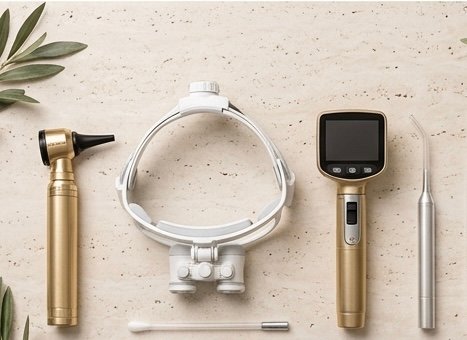
✓ Video otoscopy
✓ Gentle microsuction treatment
✓ Post-treatment ear examination
✓ Personalised ear care advice
✓ Referral advice if another ear condition is identified
Blocked ears can affect far more than your hearing.
Many people describe feeling as though they’re underwater, struggling to follow conversations or constantly reaching for the television remote.
Sometimes the cause is simply an accumulation of ear wax.
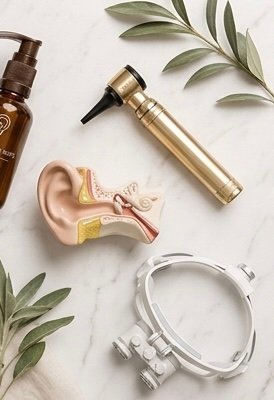
At The Audiology Suite, we provide safe, gentle ear wax removal using microsuction; the gold standard for removing excess wax under direct vision.
Before your appointment
We recommend softening the wax with olive oil or Earol for 3–5 days before your appointment whenever possible.
Softened wax is generally easier and more comfortable to remove and can reduce the need for repeat visits.
Myth or Fact?
“Ear wax is dirty and should be removed regularly.”
Myth. Ear wax is an important part of your ear’s natural defence system. It only needs to be removed when it becomes impacted or causes symptoms.
"Cotton buds clean your ears.”
Myth. Cotton buds usually push wax deeper into the ear canal and are one of the most common causes of impacted ear wax.
“Reduced hearing always means there’s ear wax.”
Myth. Reduced hearing may also be caused by age-related hearing loss, noise-induced hearing loss, infection or other ear conditions. That’s why every appointment at The Audiology Suite begins with a careful examination to identify the true cause of your symptoms.
Not every blocked ear is caused by ear wax.
Although ear wax is a common cause of hearing difficulty, it isn’t always responsible.
Symptoms such as hearing loss, tinnitus, ear pain, dizziness or a feeling of fullness may also be caused by:
* Hearing loss
* Ear infections
* Eustachian tube dysfunction
* Perforated eardrum
* Other ear conditions
Every appointment begins with a careful examination to determine whether ear wax is actually the cause of your symptoms.
If it isn’t, we will explain what the findings are and advise you on the most appropriate next steps.
Why does ear wax build up?
Ear wax (cerumen) is a completely natural substance that plays an important role in protecting your ears. It helps trap dust, dirt and bacteria, while keeping the ear canal healthy and lubricated.
In most people, ear wax gradually works its way out of the ear naturally through everyday jaw movements such as talking and chewing. However, this self-cleaning process doesn’t always work as efficiently, allowing wax to build up over time.
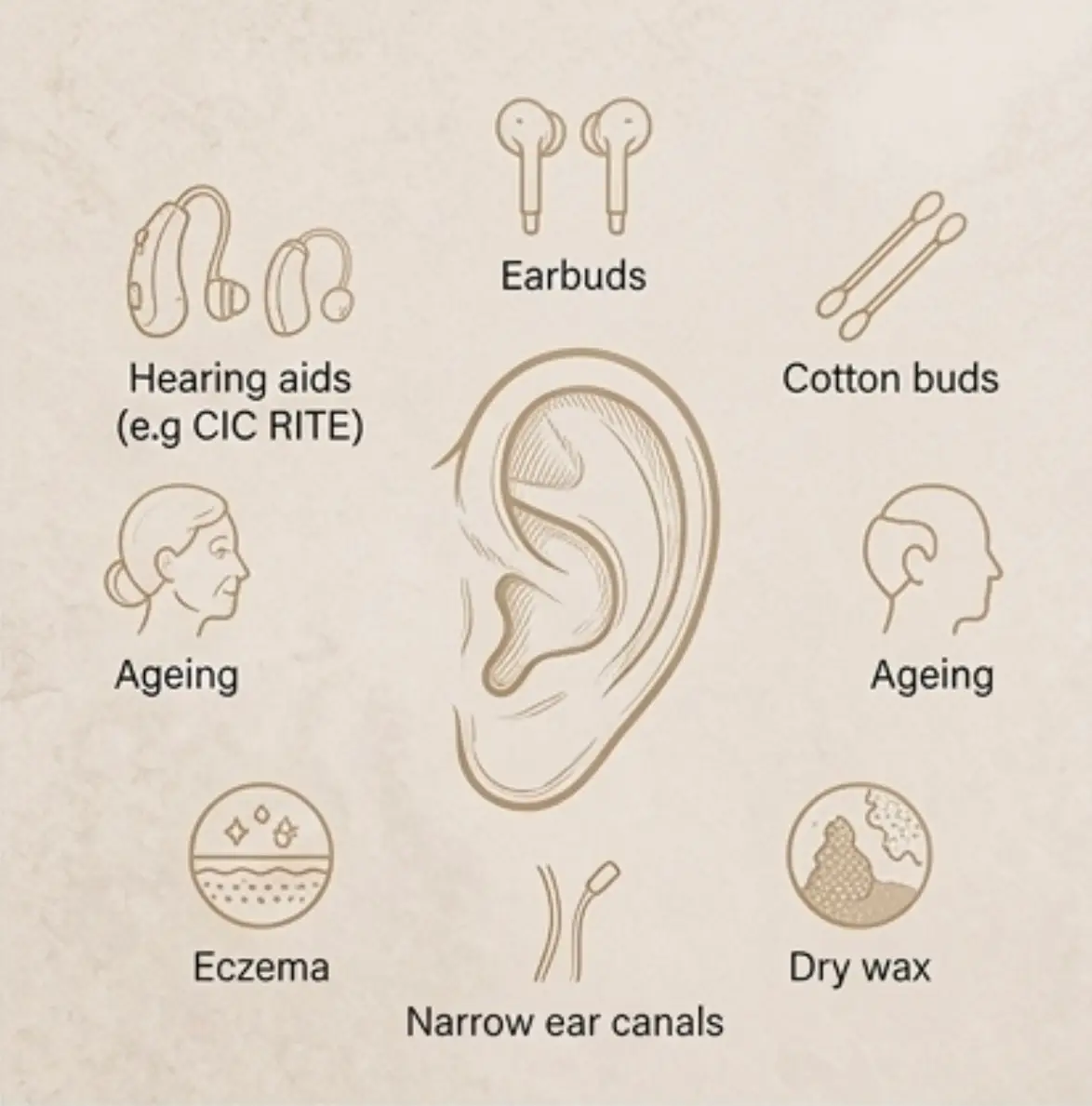
Several factors can increase the likelihood of ear wax becoming impacted.
Hearing aids sit within or over the ear canal and can act like a barrier, preventing ear wax from naturally migrating out of the ear. They may also stimulate the ear canal to produce more wax, making regular ear health checks particularly important for hearing aid users.
Frequent use of earbuds, earphones or noise-cancelling headphones can push wax deeper into the ear canal. Over time, this can cause wax to become compacted, leading to symptoms such as blocked ears, reduced hearing or discomfort.
Some people naturally have narrow, curved or irregular ear canals. This makes it more difficult for wax to move out of the ear on its own, increasing the risk of repeated blockages.
As we get older, ear wax often becomes drier and harder. At the same time, the tiny hairs within the ear canal, which normally help move wax towards the entrance of the ear become less effective. These changes make wax impaction more common with age.
Despite popular belief, cotton buds don’t remove ear wax they usually push it further into the ear canal. This can compact the wax against the eardrum, making it more difficult to remove and increasing the risk of blockage or injury.
Everyone produces ear wax differently. Some people naturally produce wax that is drier, harder or more adhesive, making it less likely to clear on its own and more prone to becoming impacted.
Skin conditions such as eczema, psoriasis and dermatitis can affect the delicate skin lining the ear canal. This may lead to increased wax production, dry flaky skin or inflammation, all of which can contribute to recurrent wax build-up.
Can ear wax be prevented?
While it isn’t always possible to prevent ear wax from building up, there are simple steps you can take to reduce the likelihood of blockages:
* Avoid inserting cotton buds or other objects into your ears.
* If you’re prone to recurring wax build-up, use olive oil or a wax-softening spray occasionally to help keep the wax soft.
* Have your ears checked periodically if you wear hearing aids or regularly use earbuds.
* Seek professional advice if you experience repeated blockages rather than trying to remove the wax yourself.
Is it really ear wax?
Have you had a hearing test?
Sometimes reduced hearing isn’t caused by wax at all.
If your ears are clear but you’re still struggling to hear conversations, you may benefit from a comprehensive hearing assessment.
If no significant wax is found during your appointment, I’ll explain your findings and discuss whether further hearing assessment would be appropriate.
hearing protection
Protecting your hearing is just as important as restoring it. If your work or hobbies expose you to loud noise, ask us about custom hearing protection to help prevent future hearing damage.